
Groundwork for
what's next.
Excavation, site development, septic systems, drainage infrastructure, and earthwork services built for Southern Maine's toughest ground conditions.
Built for every stage of development
From a single homeowner's septic field to a developer's subdivision infrastructure, Taylor Earthworks is the excavation and site-development partner trusted across Southern Maine.
Homeowners
Septic systems, drainage correction, grading, excavation, and land clearing for Maine properties.
Builders
Foundation excavation, utility trenches, site prep, and final grading sequenced to your build schedule.
Developers
Subdivision infrastructure, roads, stormwater systems, and mass earthmoving at scale.
Municipalities
Drainage improvements, erosion control, utility projects, and site restoration done to spec.
Projects Completed
Years Combined Experience
Southern Maine Service Radius
Cubic Yards of Earth Moved
Trusted by property owners, builders & developers
Full-service earthwork
From the first dig to final grade, Taylor Earthworks handles the heavy lifting that gets your project off the ground.
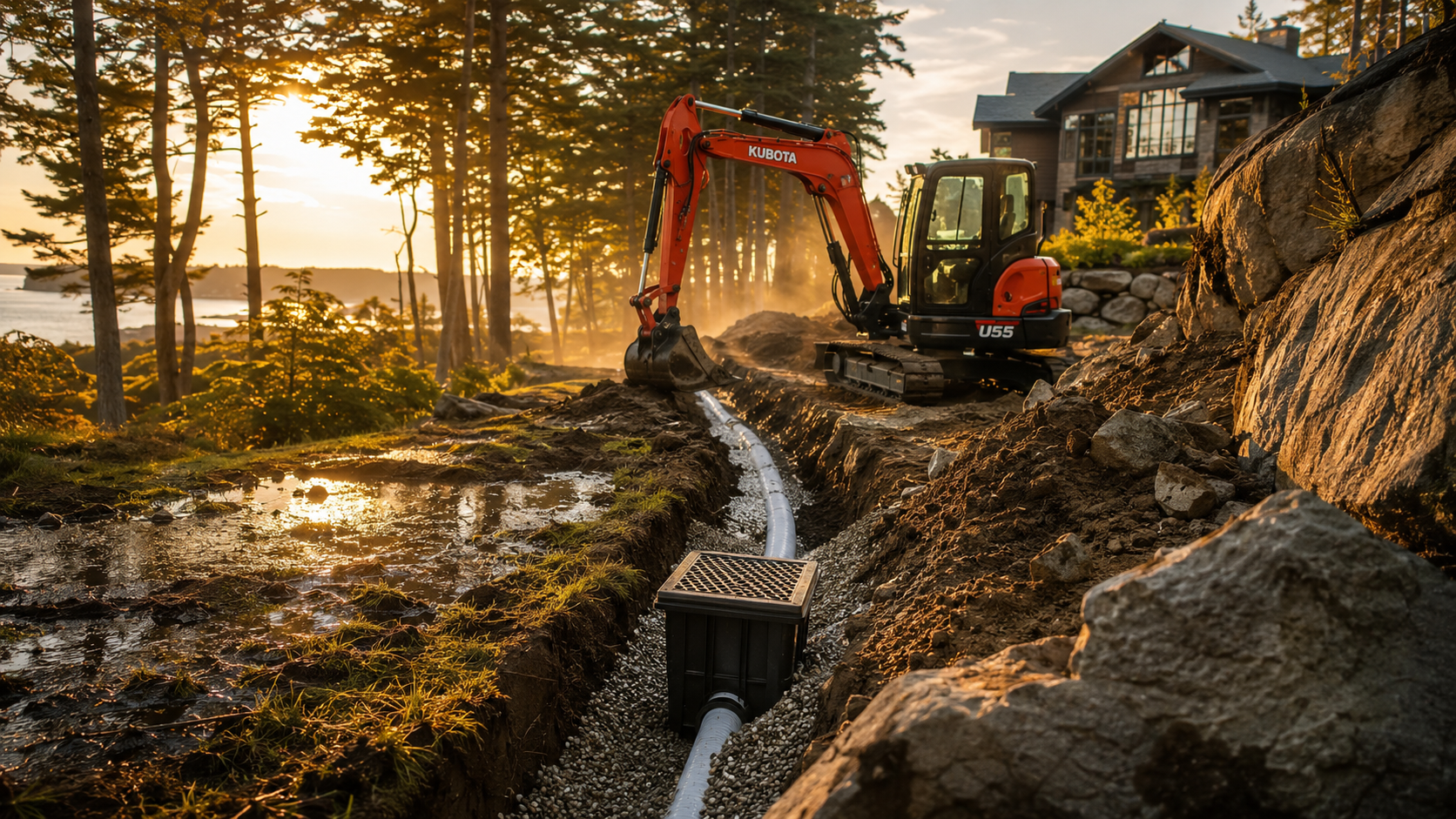
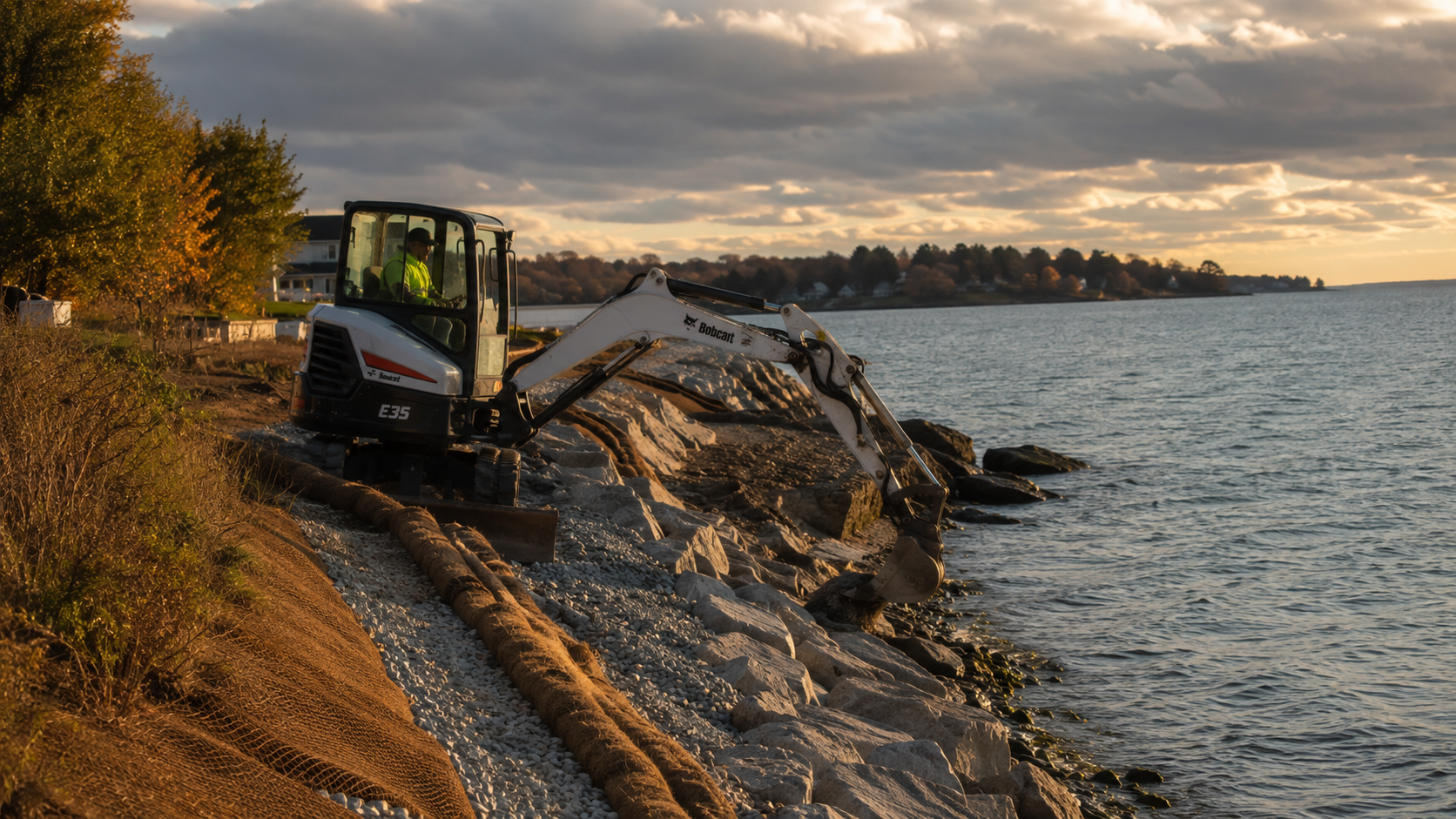

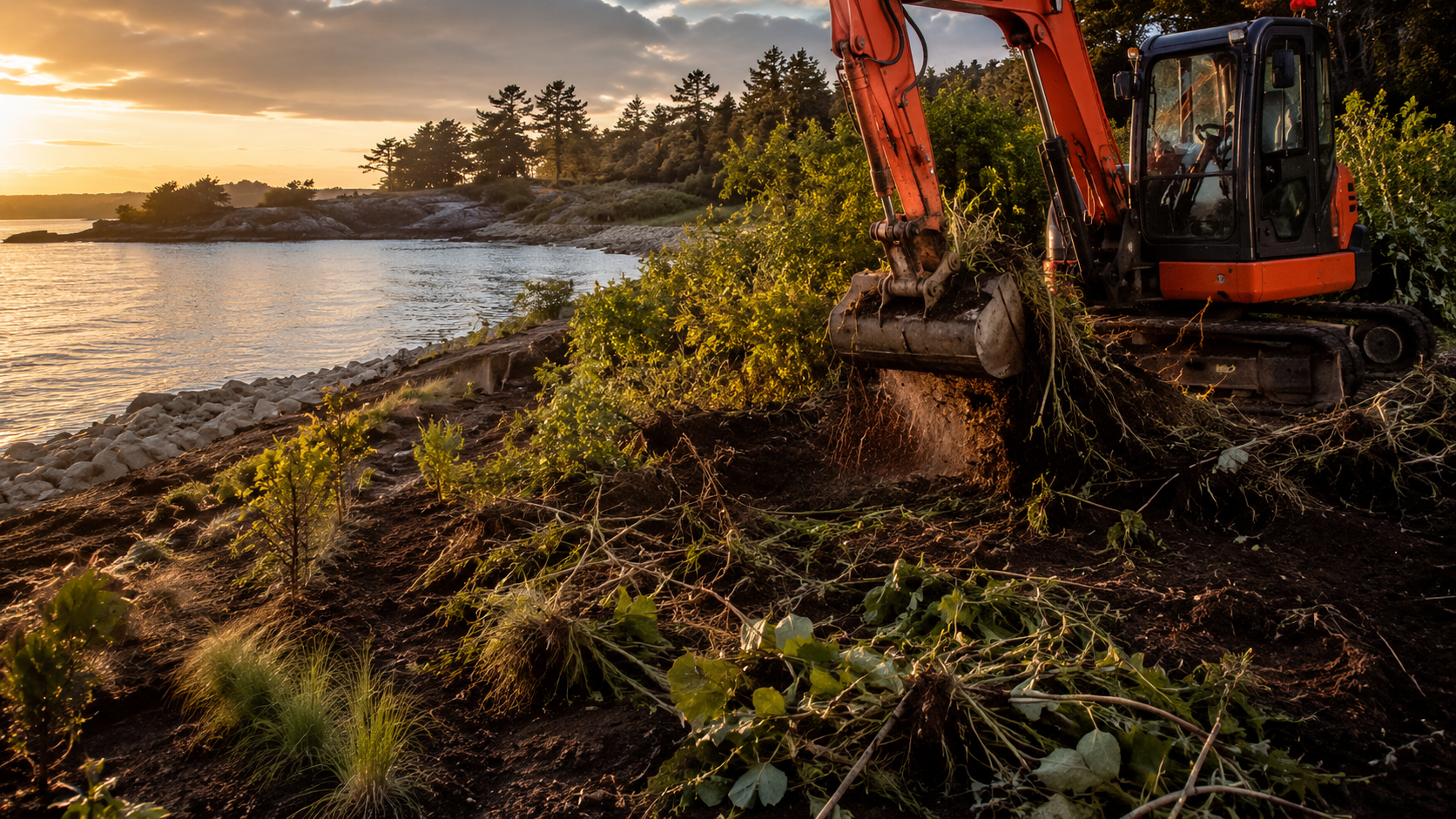
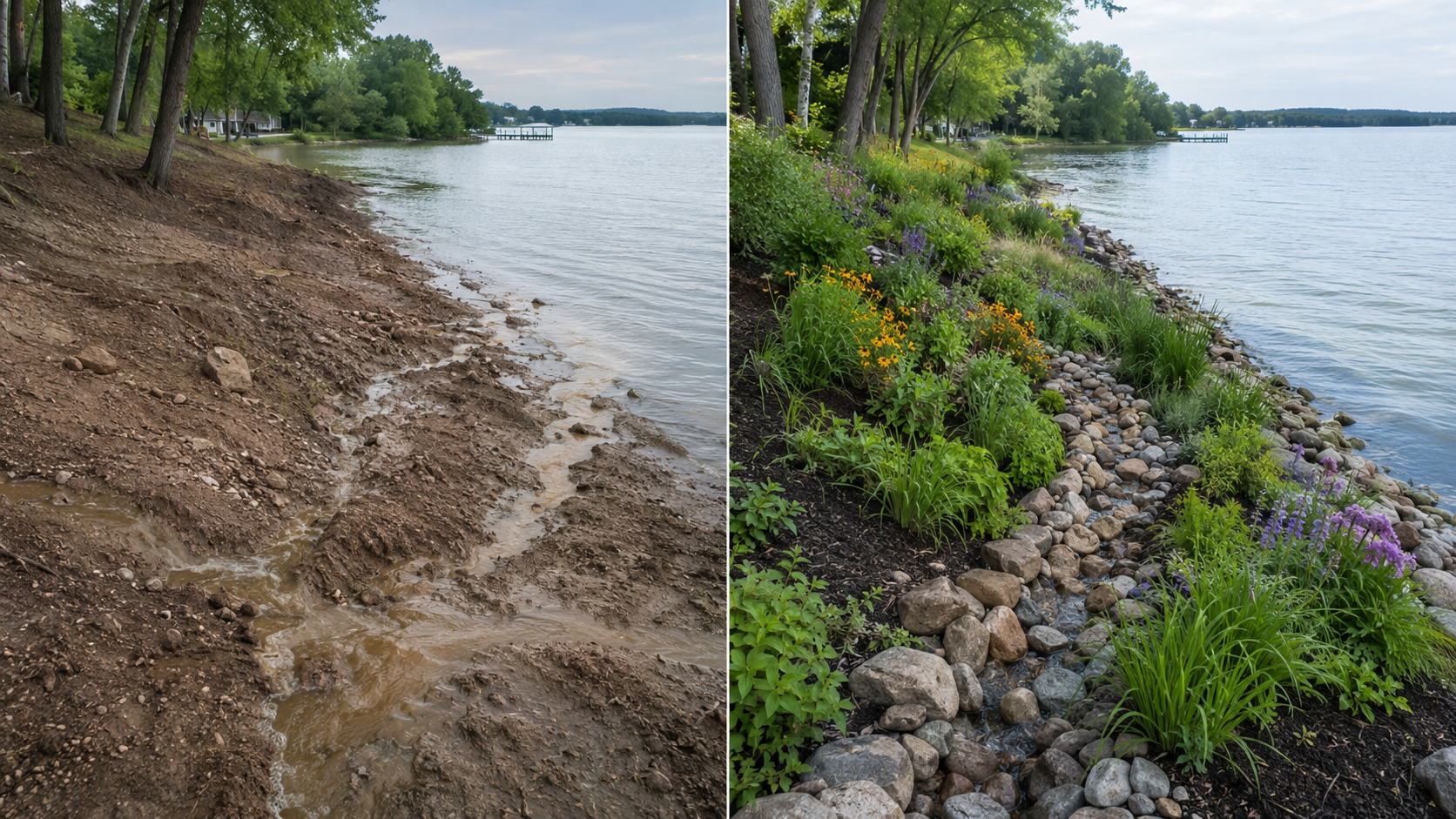
Maine ground demands experience
Excavation in Southern Maine isn't like anywhere else. The soil, the water, and the winters punish shortcuts — and reward contractors who understand the ground they're working.
Freeze-thaw cycles
Maine ground heaves and settles all winter. Footings, drains, and septic fields must be set below frost depth and built to move with the season — or they fail.
Granite ledge
Near-surface ledge is everywhere in Southern Maine. Reaching foundation depth often means ripping, hammering, or rock-splitting — work that has to be planned, not discovered mid-dig.
High groundwater
Seasonal water tables run high inland and along the coast. Without curtain drains and correct pad elevation, basements flood and leach fields surcharge.
Coastal drainage
Tidal influence, sandy soils, and shoreland zoning rules make coastal drainage and septic work a specialized discipline near Saco, Biddeford, and OOB.
Winter site prep
A short building season means winter excavation and frost protection are routine here. We sequence and protect sites so your project keeps moving through the cold.
Permitting & compliance
Maine DEP regulations, shoreland zoning requirements, and local permitting processes can dramatically impact project cost and timeline. Experience prevents expensive mistakes.
The difference between a site that drains for fifty years and one that fails in five is local knowledge.
How we build for MaineEngineering on the ground
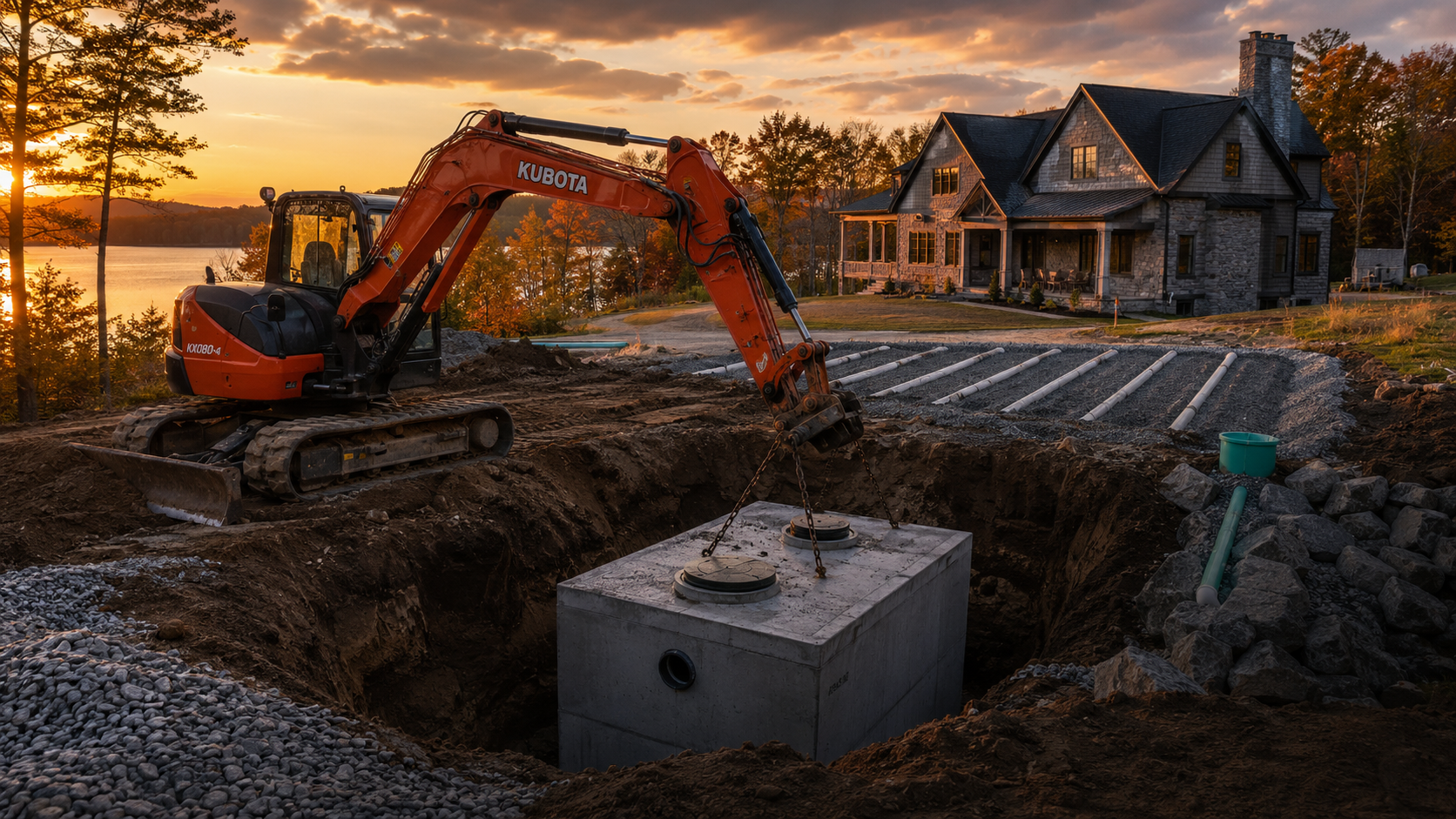
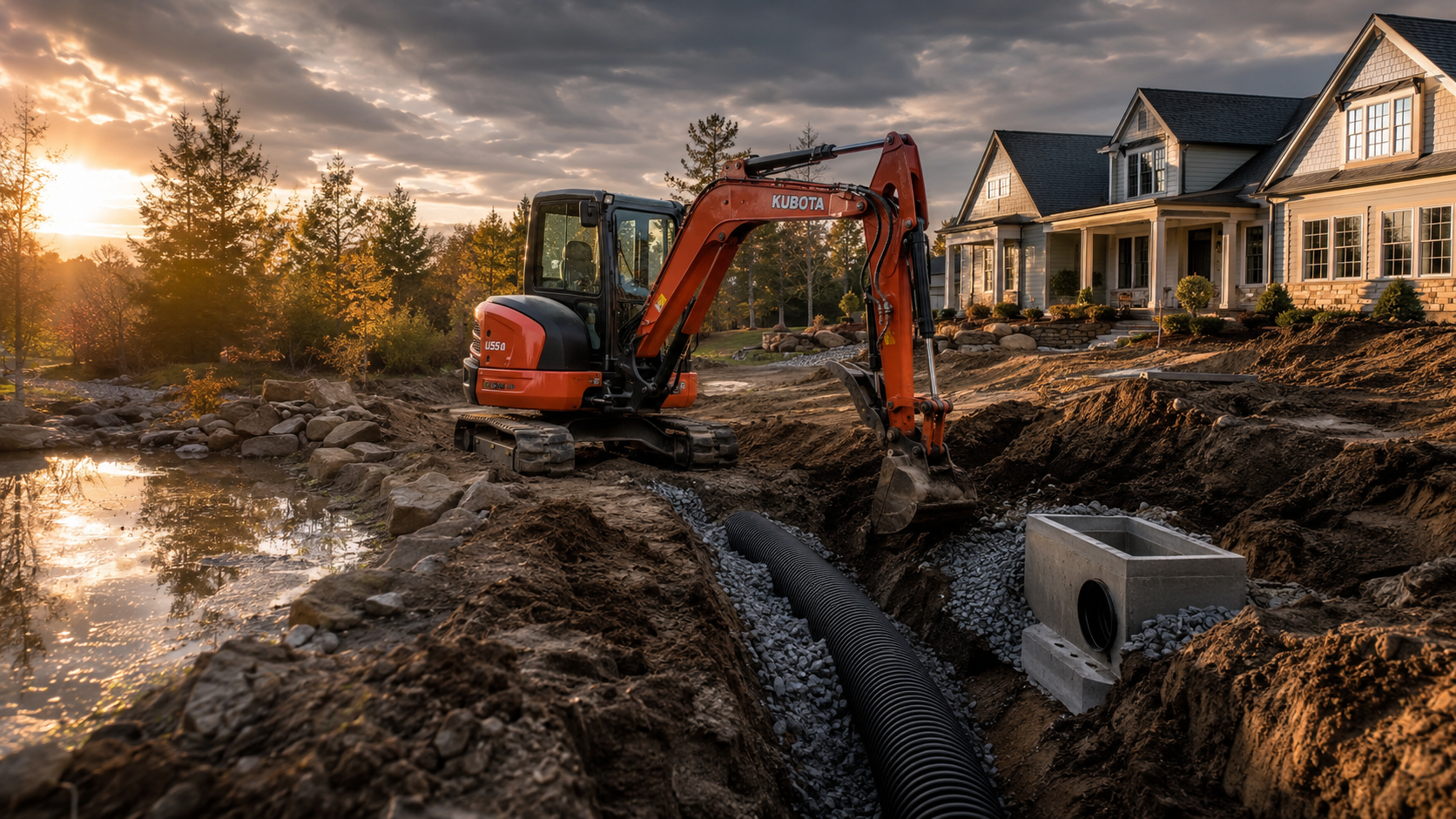
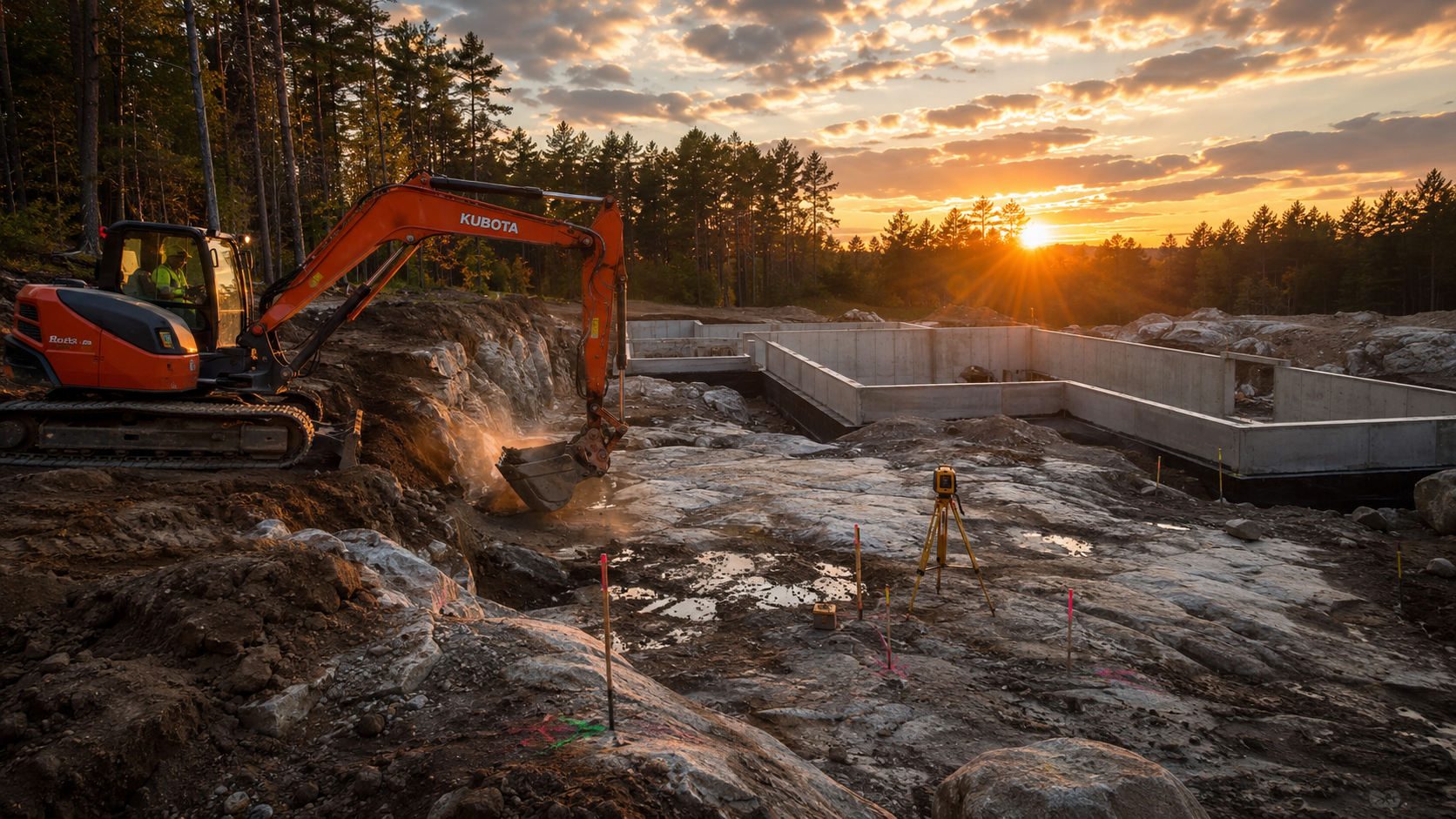
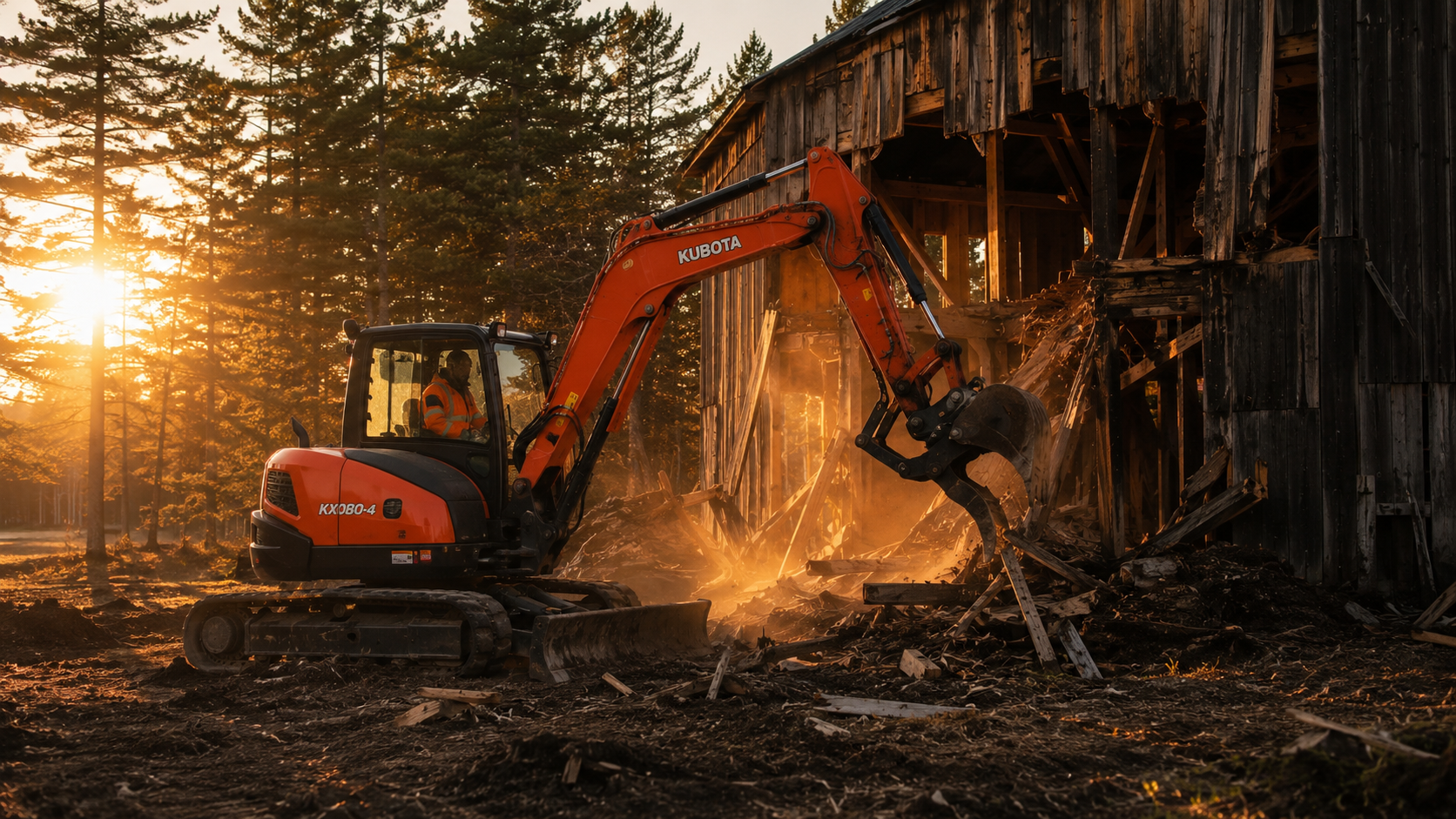
Real Southern Maine site-development, excavation, septic, and drainage projects — documented as case studies, from challenge to measurable outcome.

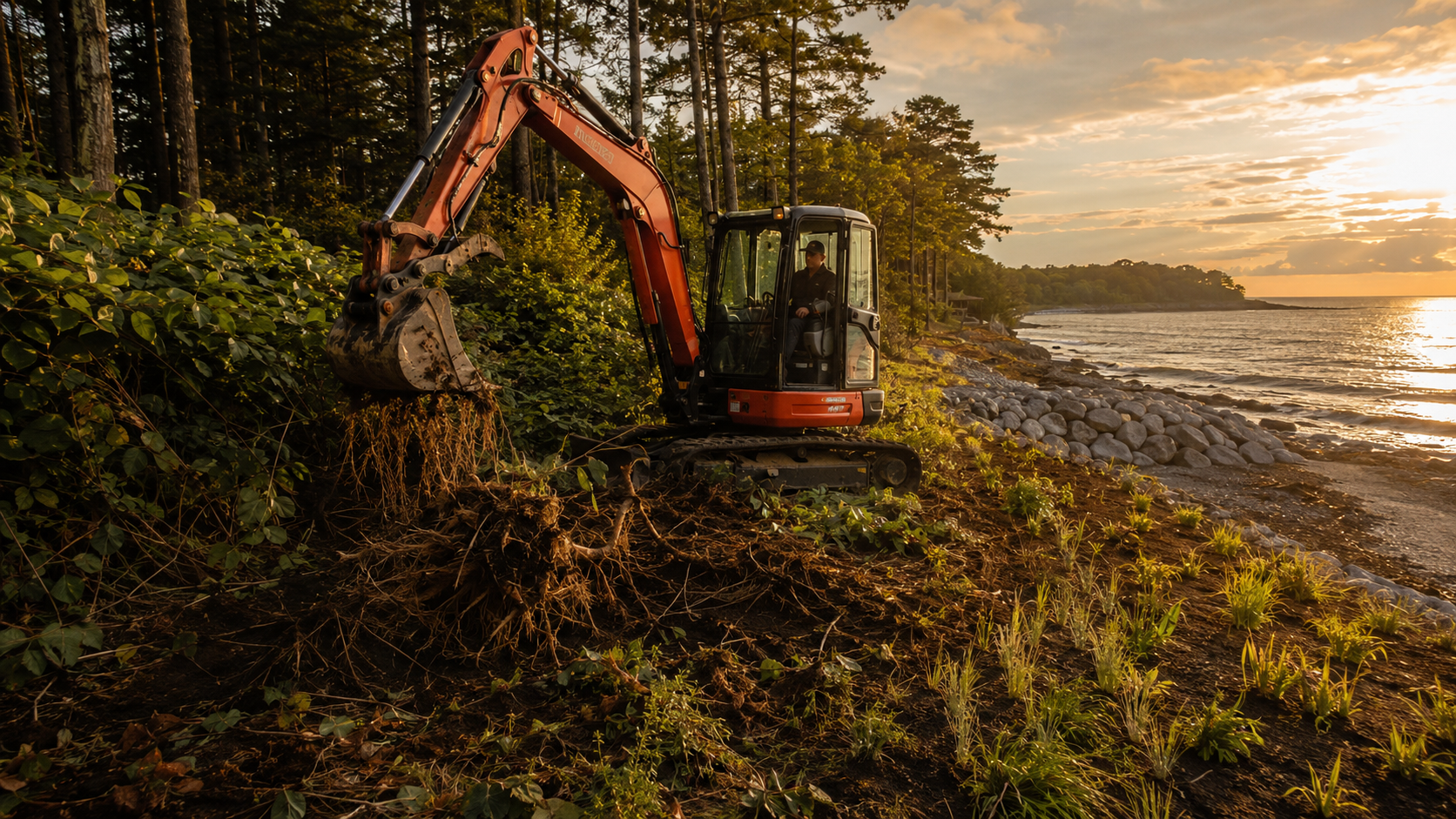
The earthwork partner for Southern Maine
From a single residential septic field to commercial site development and public infrastructure, Taylor Earthworks brings the equipment, crews, and local experience to handle the full range of earthwork in the region.
Residential Projects
Septic systems, drainage correction, foundation excavation, grading, and full site development for custom homes across Southern Maine.
Commercial Site Development
Building pads, parking, utilities, mass earthwork, and finish grading sequenced to keep commercial builds on schedule and on spec.
Infrastructure & Drainage
Subdivision roads, stormwater systems, culverts, erosion control, and engineered drainage built to DEP and municipal standards.
From walkthrough to final grade
Site visit
We walk the property, read the soil, and understand the goal.
Clear estimate
A detailed, line-item quote with an honest timeline — no surprises.
Permits & plan
We coordinate permits, surveyors, and engineers to keep you compliant.
Execute
Right machine, right crew, sequenced so each phase sets up the next.
Final grade
Stabilized, cleaned up, and ready for the next phase of your build.
Work you can stand on
Local to Saco
We live and work here. We know southern Maine soil, code, and weather — and we show up when we say we will.
Fully Insured
Licensed and insured for residential and commercial work, with safe, careful crews on every job.
On Time, On Budget
Clear estimates, honest timelines, and clean sites. No surprises, no runaround.
Modern Equipment
The right machine and attachments for the job — efficient, precise, and ready for tough Maine ground.
Built to Last
Everything we build is engineered to drain, hold, and survive freeze-thaw season after season.
Veteran-Owned
Built on accountability, professionalism, and a commitment to doing the job right the first time.
Code Compliant
DEP, shoreland zoning, and Maine subsurface-wastewater rules handled correctly the first time.
Built on reputation
The strongest measure of our work is the homeowners, builders, and developers who call us back and refer us to their neighbors. Verified client reviews will appear here as we publish them.
Client reviews coming soon.
Client reviews coming soon.
Client reviews coming soon.
Trusted throughout Southern Maine
From the coast to the inland towns, Taylor Earthworks has moved earth, solved drainage, and prepared sites across the region. Wherever you build, we know the ground.
Excavation & utility trenching
Driveways & site grading
Drainage correction & grading
Residential site development
Excavation & septic systems
Site prep & earthwork
75 miles around Saco
Based in Saco, we serve homeowners, contractors, developers, and municipalities throughout southern Maine and into neighboring communities.
Excavation & site work in Maine, answered
Straight answers to the questions homeowners, builders, and developers ask us most about excavation, septic, drainage, and site development in Southern Maine.
Excavation cost in Southern Maine depends on the scope, the soil, and access to the site. Small jobs — a footing dig, a utility trench, or minor grading — often run a few thousand dollars, while full site work for a new home can reach the tens of thousands. The biggest cost drivers in Maine are granite ledge, high groundwater, and haul distance for spoils and imported fill. Near-surface ledge may require ripping, hammering, or rock-splitting, which adds time and equipment. Wet conditions can demand dewatering or curtain drains. Because every Maine lot is different, the only honest number comes from walking the property. At Taylor Earthworks we provide a detailed, line-item estimate after a free site visit, so you understand exactly what each phase costs and why — no vague allowances and no mid-project surprises. That transparency is why homeowners, builders, and developers across Southern Maine trust us to price work fairly the first time.
Site development bundles several disciplines — clearing, rough and finish grading, building-pad construction, foundation excavation, driveway, and drainage — so pricing varies widely with the size and difficulty of the lot. A modest, level lot with good soils might be developed for a moderate cost, while a wooded, sloped lot with ledge and seasonal groundwater can be considerably more because each obstacle adds equipment, fill, and time. Driveway length, the volume of material moved, and shoreland or wetland setbacks also move the number. For a typical custom-home site in Southern Maine, full development commonly falls in the five-figure range. The smartest way to control cost is to plan the earthwork before the foundation crew arrives, so grades, drainage, and pad elevation are right the first time. Taylor Earthworks handles the entire scope under one roof and delivers a clear, itemized estimate after a free site walk, giving you a realistic budget and timeline before any machine touches the ground.
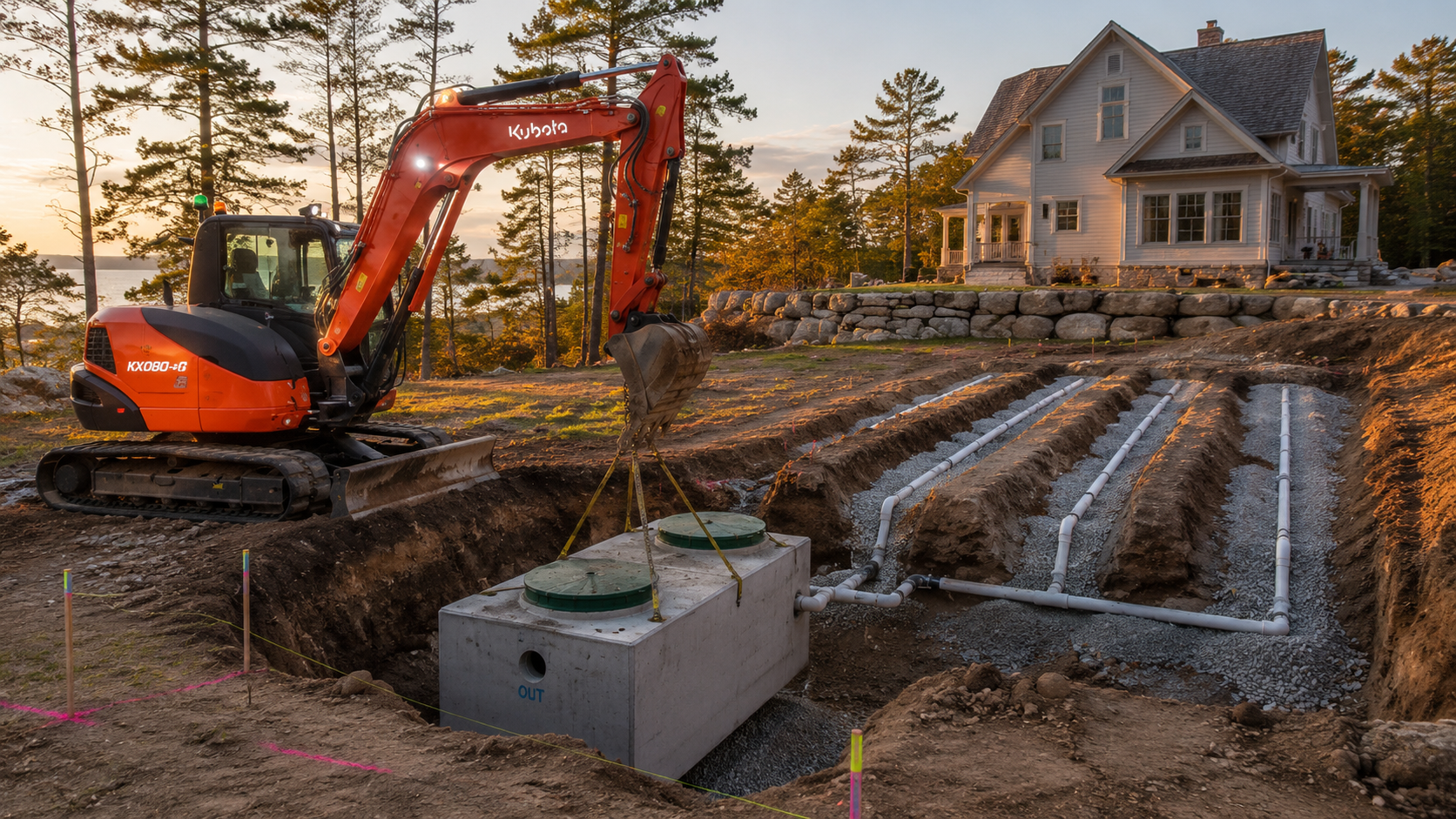
A new conventional septic system in Maine typically costs in the low-to-mid five figures, while engineered or mound systems for difficult soils cost more because they add tanks, pumps, and imported sand. Maine sizes septic systems by bedroom count, so a larger home needs a larger field. The biggest variables are soil type and the water table: sandy, well-draining ground supports an inexpensive gravity system, while clay, ledge, or high seasonal groundwater — common along the coast in Saco, Biddeford, and Old Orchard Beach — forces an engineered design. Every system in Maine requires a licensed site evaluator's HHE-200 design and a state subsurface wastewater permit issued through the local plumbing inspector. We install strictly to that approved design, set the tank and distribution box dead level, bed the leach field in clean stone, and pass inspection before backfill. Taylor Earthworks quotes directly from your HHE-200 so the price reflects your actual site, not a generic estimate.
Most residential excavation jobs take anywhere from a single day to two weeks, depending on what's involved. A footing dig or utility trench can be completed in a day or two, while full site development — clearing, grading, foundation excavation, and drainage — usually runs one to two weeks. The schedule in Maine is most affected by ledge, groundwater, and weather. Hitting unexpected rock can add days if it requires hammering or splitting, which is why we identify ledge risk during the site walk and plan for it up front. Wet conditions may require dewatering before work continues. Permitting and inspections also factor into the overall timeline, even though they happen before the machines arrive. At Taylor Earthworks we give you an honest, realistic timeline with your estimate and sequence each phase so one stage sets up the next — keeping the project moving and avoiding the costly stops that come from poor planning.
Permit requirements in Maine depend on the work. Septic installations always require a state subsurface wastewater disposal permit, issued through your town's local plumbing inspector and based on a licensed site evaluator's HHE-200 design. Building near water, wetlands, or within the shoreland zone triggers additional review under Maine's Shoreland Zoning and DEP rules, and may require erosion-control measures during construction. Driveway entrances onto public roads often need a town or MaineDOT entrance permit, and earthmoving above certain thresholds can require a stormwater or construction permit. Many towns also require a building permit that covers foundation excavation. Navigating this correctly the first time prevents stop-work orders and costly rework. Taylor Earthworks coordinates with site evaluators, surveyors, engineers, and code officers to make sure the right permits are in place before we break ground. We've worked under the permitting rules of towns throughout Southern Maine, so we know what each community expects and how to keep your project fully compliant from start to finish.
Yes. Taylor Earthworks works through all four Maine seasons, including winter. Maine's building season is short, so winter excavation and frost protection are routine for us, not exceptions. Frozen ground actually helps on some jobs by firming up soft, wet sites and giving equipment stable access where summer mud would stall progress. Cold-weather work does require extra planning — we protect open excavations from frost, manage snow and ice on site, and sequence work to take advantage of conditions rather than fight them. Some tasks, like final grading and seeding for erosion control, are best held until the ground thaws, and we'll tell you honestly when waiting serves your project better. The advantage of working year-round is momentum: builders who keep their site work moving through winter arrive at spring ready to frame instead of waiting in line. Whatever the season, we show up when we say we will and keep your project on schedule across Southern Maine.
Absolutely — drainage is one of our core specialties. Chronic standing water, a flooding driveway, a wet basement, or an eroding slope almost always traces back to a handful of causes: grade that pushes water toward the home, compacted or clay-heavy soils, blocked or undersized culverts, and downspouts dumping at the foundation — all made worse by Maine's freeze-thaw cycle. Rather than throwing pipe at the symptoms, we diagnose the actual source, often by walking the site during rain to map where water comes from, where it pools, and where it needs to go. Then we engineer a complete path: catch basins, curtain drains to intercept upslope flow, foundation perimeter drains, correctly sized culverts, and regraded swales that carry everything to a daylight outlet by gravity. The result is a property that stays dry through spring thaw and heavy storms. For any Southern Maine homeowner battling water, this source-first approach is what actually solves the problem permanently instead of just delaying it.
Yes — a large share of our work is for builders, general contractors, and developers across Southern Maine. We understand that on a construction project, the earthwork sets the pace for everyone who follows, so we sequence our work to fit your schedule and hand off a clean, square, build-ready site. For builders we handle foundation and footing excavation, frost walls, utility trenches, rough and finish grading, and driveways. For developers we take on larger-scale infrastructure: subdivision roads, mass earthmoving, stormwater systems, and erosion control built to engineered plans and town specifications. We coordinate directly with your surveyors, engineers, and code officers, and we manage spoils, dewatering, and site access so your crews aren't waiting on the ground. Reliable scheduling, accurate grades, and clean handoffs are what keep contractors coming back to us project after project. Whether it's a single spec home or a multi-lot development, Taylor Earthworks has the equipment and the local experience to keep your build moving.
Drainage correction in Southern Maine typically runs from a few thousand dollars for a targeted regrade or a short run of French drain to the low five figures for a full remediation that combines catch basins, curtain drains, foundation perimeter drains, a new culvert, and regraded swales. French and curtain drains commonly run $25 to $60 per linear foot installed, with the price moving up when ledge, deep excavation, or finished landscaping is involved. The honest answer is that price follows the source of the water, not the symptom — so we walk the property, often during rain, to map where water comes from and where it needs to go before quoting. That diagnosis is what keeps you from paying twice: a correctly engineered system solves the problem permanently instead of chasing it. Every Taylor Earthworks drainage estimate is itemized after a free site visit so you know exactly what each component costs and why.
Yes. We build engineered retaining walls for grade changes, walkout foundations, driveways, and erosion-prone slopes throughout Southern Maine. Depending on height, soil, and the load behind the wall, we install segmental block, large armor stone, and boulder walls, all set on a properly compacted base with the drainage and backfill that keep a wall standing through decades of freeze-thaw. The detail most failed walls skip is what happens behind the face: drainage stone, filter fabric, and a drain line to relieve hydrostatic pressure are what prevent bulging and collapse in Maine's wet, frost-heaving ground. Taller or load-bearing walls may require an engineered design and a permit, which we coordinate as part of the scope. Because retaining walls so often tie into grading, drainage, and site development, handling them under one roof keeps the elevations, water management, and finished grade working together rather than fighting each other.
Yes — working through granite ledge is routine for us in Southern Maine, where near-surface bedrock is common. Depending on the volume, hardness, and how close the work is to structures, we rip ledge with excavator-mounted teeth, break it with hydraulic hammers, or use mechanical rock-splitting where blasting isn't appropriate. The key is identifying ledge during the site walk so it's planned for in the schedule and budget rather than discovered mid-dig, which is where most projects lose time and money. We also reuse crushed ledge on site as structural base wherever possible, which offsets some of the added cost. Whether it's a foundation excavation, a utility trench, or a septic field that has to reach permitted depth through rock, we have the equipment and the local experience to get to grade without surprises.
Constantly. A large share of our work is built to plans drawn by civil engineers, site evaluators, and surveyors, and we coordinate directly with them throughout the project. We build septic systems to the licensed site evaluator's HHE-200 design, install stormwater and drainage infrastructure to engineered specifications, and set grades and pad elevations to surveyed benchmarks. When a project needs an engineered retaining wall, a stormwater permit, or a DEP review, we work alongside the design professionals to make sure what gets built in the field matches what's on the plans and passes inspection. For builders and developers, this coordination is exactly the point — clean handoffs between the engineer, the excavation crew, and the trades that follow are what keep a project on schedule and on budget.
Insights from the field
Practical guides on excavation cost, drainage, septic systems, and site preparation — written from real Southern Maine project experience.
Let's talk about your property.
Whether you're planning a custom home, replacing a septic system, solving drainage issues, or preparing land for development, Taylor Earthworks can help.